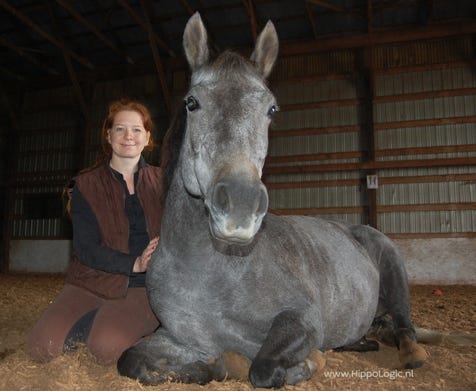
Befriending Horses...
How to be your horse's best (human) friend. Here is my personal opinion, based on my personal decades of experience being around horses.

I really would like to be able to write a step-by-step manual about how to become your horse’s best friend. I’ve thought about this for a long time, and I finally reached the conclusion that there is no manual. Sorry.
However, there are many things to build confidence and trust in your horse, that might lead to a deep, interspecies friendship on soul level.
Spending Time with your Horse
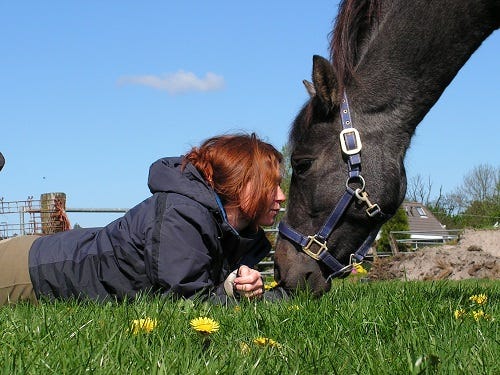
Developing friendships takes time. Nowadays most horse people seem to lack time… Lack of time is the most commonly used excuse when it comes to training horses. Although I do think in that perspective it’s something else, disguised as (a lack of) time. More on that in another article
.
In this era we all seem to be busy and don’t have time for anything. Yet, we spent most of our time in front of a screen (yes, you dear reader!).
We often hear we have to ‘spent time’ with our horses to become friends. How much time?
How Much Time it will take to Become Friends with your Horse?
There is this interesting study that applies to human friendships. I do believe something similar applies to horse-human relationships. It might even take longer for an interspecies friendship to happen. Or shorter… I don’t know. Here’s what they found about humans.
Quote from this article published by the University of Kansas:
In a new report published in the Journal of Social and Personal Relationships, Associate Professor of Communication Studies Jeffrey Hall found that it takes roughly 50 hours of time together to move from mere acquaintance to casual friend, 90 hours to go from that stage to simple “friend” status and more than 200 hours before you can consider someone your close friend.”
How Much Time do You Spent With your Horse?
The article also states that time spent at work didn’t count. In comparison, I would like to suggest that time spent in NH/traditional training with your horse doesn’t count.
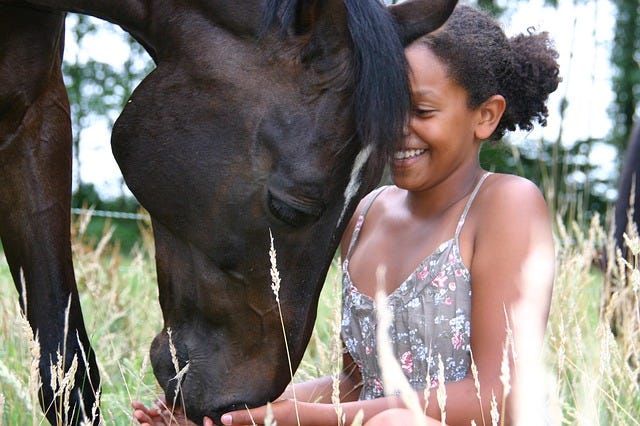
I believe that observing horses, hanging out with them in the pasture and have playful (not aimed at a certain outcome) interactions are valuable in building friendships. Also touch in the form or mutual grooming, massages and gentle stroking or touches helps connection building
.
I also believe that giving the horse a change to observe you, helps! Let them watch how you interact with other horses, other animals and humans. This offers your horse valuable information about who you are.
When I was 12, I had all the time in the world. Me and my friend spent every Saturday from 9 am to 4 pm in the pasture observing the ponies. In Summer even almost the whole day, every day. Mainly because we couldn’t catch them. They didn’t trust us (or people with halters in general). Those hours are my most valuable study hours and formed me as a horse person. What those ponies taught me, has been invaluable and no human could have taught me so clearly. I learned to be a reliable, trustworthy person in their equine eyes.
Getting to Know your Horse in All Seasons
Have you spent more or less than 200 hours with your horse, yet?
I have found that it takes 12 to 18 months to build a strong trust relationship with a horse. Over the span of a year, you get to know your horse’s behaviour in every seaon.
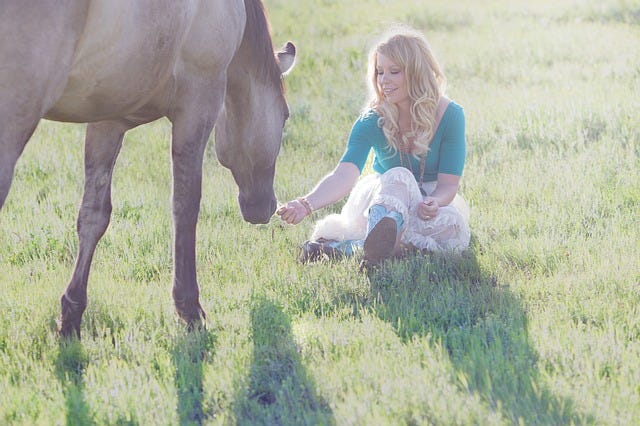
Horses might behave differently in Spring (on a diet of maybe high sugary pasture grass) or when they (if they are stallions) start to smell mares in heat. Fall with stormy weather and the Winter cold and heavy coats will influence their behaviours as well. In Summer when it’s hot and there are lots of insects, they can behave completely different
.
Although the foundation of mutual trust can be build in less than 12 months, you know a horse best, when you’ve seen him in different environments and under different circumstances (seasons). At least, that’s my experience. It’s always in hindsight that I realize: yes, we’ve gone though all seasons and now it feels different than when I had the feeling our friendship started to form.
Observation is Learning
We learned what the ponies liked and disliked by sitting in the pasture observing them. We learned about what their body language meant: when they didn’t like something they walked or trotted away. They moved their ears, tail, head in certain ways.
We learned how they played with each other, what their rules were and what it looked liked, if one of the ponies overstepped a boundary.
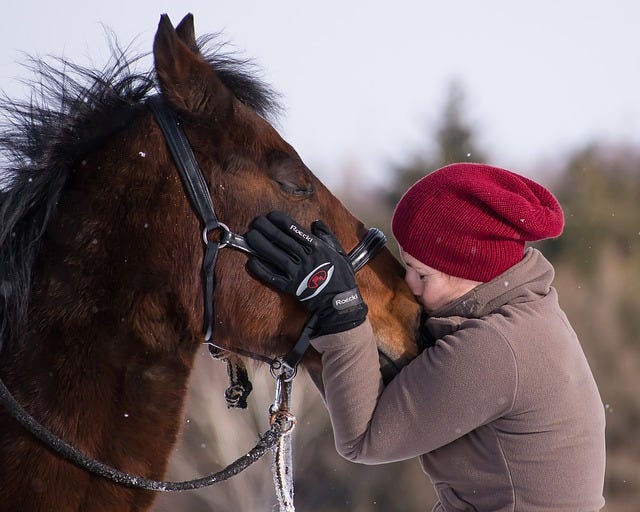
We also learned who they liked best: who their friends were and who was ‘OK’. How they welcomed (or not!) new ponies in their herd, and that it mattered if the new comers where mares, stallions or geldings. Sometimes even their colour mattered!
Let Your Horse Be your Teacher
We learned about their memories: when we did ride them (occasionally) and didn’t treat them well (in their eyes!), they wouldn’t let us halter them the week after. We learned quickly that the dominance theory was only a theory and that horses had a clear opinion of what was fair (about whip use, like we were taught in the riding lessons) and what wasn’t.
We learned about their memories and how forgiving they are. How they seem to understand the meaning behind our behaviours: we could hurt them unintentionally and they would be much more forgiving then when we had hurt them intentionally with whip use.
I value my horse hours back in the day more than anything. I didn’t realize it when I was in my teenage years, but the thousands of hours I’ve spent with horses (without any human guidance) in those years paid off! Horses were my teachers and they have formed me as a horse person and trainer.
How Clicker Training helps Building Relationships with Horses
From a positive reinforcement (R+) trainer’s perspective I do believe that time spent clicker training is not totally wasted when in comes to building a friendship with your horse.
In positive reinforcement/clicker training, you aks your horses to come up with ‘solutions’ (behaviours). You allow your horse to choose (and always multiple answers are rewarded with something the horse values and wants to have/work for) and you ask your horse for his/her opinion! The feedback that you get in R+ training is immensely valuable for building friendships with horses.
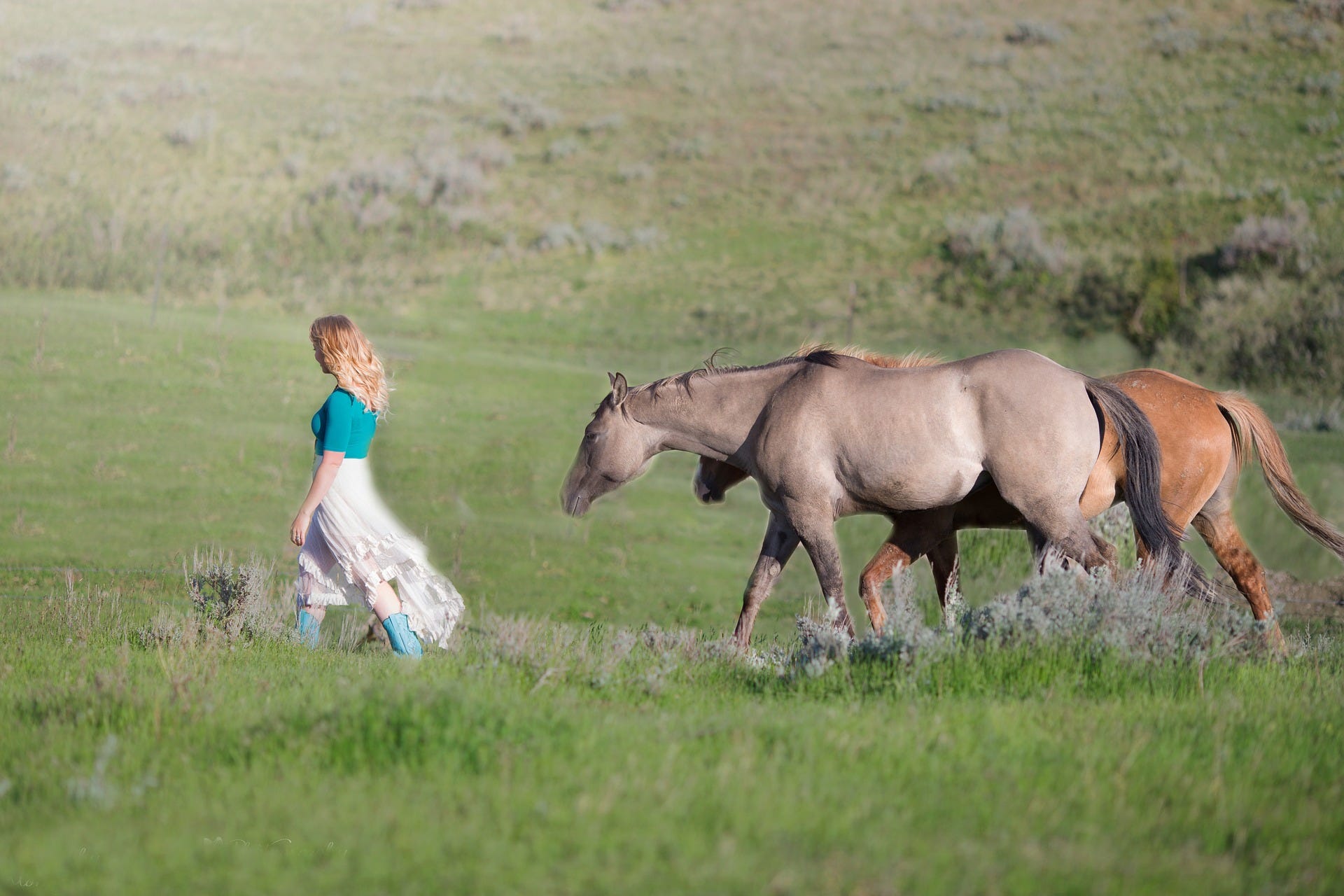
Imagine you have a friend who tells you what to do, when to do it and how long to do it. And he would never ask you anything, never wants your opinion about something… Would you consider that person a friend? I wouldn’t
!
Choices
Yet, in traditional (coercive) horse training In general!) that’s what people do: tell the horse what, when, how and how long to do something. When the horse speaks up, he’s considered “naughty” , “disobedient" or even “stupid”….
On top of that, the horse can’t choose his friends or who his neighbour is in the stall, how often he’s outside with friends, how much or what he eats or who he mates with (if he gets a say in it at all).
Therefor I don’t think time spent with a horse in R- (negative reinforcement) training counts in building friendships. On the contrary: I believe it breaks down or prevents trust building.
Listening, to Build Friendships
By giving your horse choices and responding to your horses feedback, you build a friendship. Everyone wants to be heard! Horses, too.
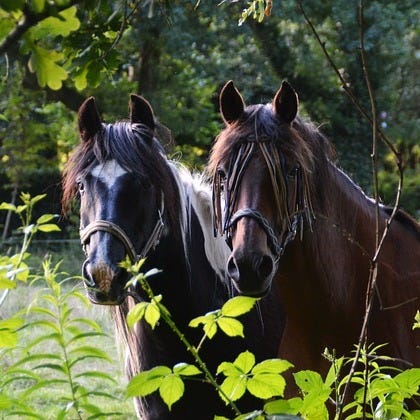
Horses really tend to bond quickly with people who listen to their feedback, take their messages seriously. They understand that you understand what they are communicating. They appreciate that
!
Equine Behaviour as Foundation to Your Friendship
The more you know about horses, their natural behaviours, their natural wants and needs, their communication and natural habitat, the easier it is to connect with all horses. We can’t count on horses imagining being human, but we can imagine being horses.
If you want to befriend your horse: study their species, their natural wants and needs.
I would suggest studying horse behaviour by observing horses. Listen more to them than to people. Be careful listening to what people say about horse behaviour: where to they get their knowledge from? There is a lot of bullshit and myths going around. When you get to know horses, you’ll learn to separate what’s real and what’s a myth.
Imagine being a Horse
Put yourself in your horse’s shoes… It’s often really simple: would YOU like to be whipped in a trot? Would you like to be reinforced by an appetitive (=something you value and want to have or get)? Would you like to be treated that way? If the answer is no, your horse might feel the same way…
7 Simple Steps to Befriend Your Horse
Study their natural behaviour so you’ll learn to understand that they want and need
Spent time with them to get to know them, outside ‘work hours’. Let them observe you. Be in the moment, with them.
Observe their behaviour: what are they communicating with their body language? They often tell you when they are hurt, what they want and how you can do a better job ass their guardian and friend.
How to they behave towards other horses and what can you learn? And I am not talking about finding excuses to act violently towards them ‘because they bite and kick each other, too’. (In a natural environment there is way less bodily aggressiveness than among horses that are kept in an unnatural environment that doesn’t meet their needs!)
Offer your horse choices in life and in training and learn from their choices!
Do not only ‘listen’ to your horse, respond to their feedback in a way that serves him/her! That’s how your horse learns you’re really listening! That’s how s/he knows you care.
Communicate through touch, the way your horse enjoys. Use a brush you know he likes or use your hands to brush off dried mud. Find the spots he likes to be scratched or massaged: they’ll show you!
These 7 things are easy, but… you have to remind yourself to spent time on practising them. That’s very much about how much priority you give to the outcome: befriending your horse.
Be the best friend for your horse you can be!