

Why Observation is Key to Developing Your Horse Training Skills, even when you're NOT a Horse Trainer (just a horse owner)
Observation helps you determine your horse's motivation to do or not do what you want. If he doesn't listen, you can use *his* objection, take it away and make it easy and fun to do what you want.

The better you can guess the motivation for your horse’s behaviour, the better teacher you become for your horse. The better you can train him.
(I say ‘guess’ because we will never know for sure what another living being is thinking, or how s/he’s experiencing a situation.)
However,
You can make educated guesses!
The more you know about the nature of horses, their natural behaviours, their wants and needs, and the better you can read and understand their body language, the better guesses you can make.
Even when you don’t consider yourself a ‘horse trainer’, you are if you are deliberately changing his behaviour or responses.
For example, let’s take trailer loading.
How can your observational skills help you load your horse when he would rather stay outside the trailer?
When Horses Are Hard To Load into a Trailer
Your horse doesn’t want to go into the trailer.
When you know the reason WHY, he isn’t going in there, you can adjust your approach and tailor it to what your horse needs in that moment.
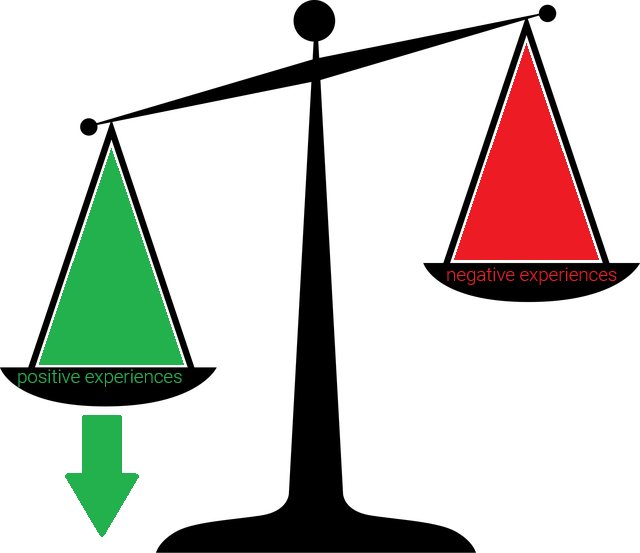
This will tip the scales of success in your favour.
Creating Mutual Understanding & Trust Between Horse and Handler
This is how you develop mutual understanding and trust.
Every time you show your horse, I understand you. I take care of you.
You’re building trust.
It’s like putting money in a Trust Account.
The more you have, the safer it will be to withdraw some if you need to. As long as you keep the balance much more towards the positive.
Two Kinds of Motivation
There are only 2 main reasons for changing behaviour. We use them in training all the time.
Moving Towards Energy: The horse wants to get something. An appetitive
Moving Away From Energy: The horse wants to avoid something. An aversive.
When you can guess why your horse is doing what he’s doing, and not doing what you want, you can change the circumstances and get the behaviour you want.
You don’t have to ‘make your idea, his idea’.
You can make your idea more enticing, more fun and help your horse want it. Because of his own free will, not due to coercion.
That’s why it’s so powerful to understand if something is aversive or appetitive to your horse.
Why horses won’t load
Examples of Moving Away From-reasons from your horse.
This is what happens when the trailer or associations to the trailer are aversive to your horse:
Fear
The trailer is new and unfamiliar
Rain is pounding on the roof, and the noise is startling him
The trailer smells like stress poop, and that’s a sign to stay away from it
Last time he got in the trailer, he was moved and never saw his herd again. Negative association.
The last journey was exhausting. Again, the horse made a negative association with the trailer or travelling.
In other words, there is something aversive going on that the horse wants to avoid.
He made a negative association with the trailer. He wants to turn around and Move Away BECAUSE of (something) he associated with the trailer.
Appetitive reasons he won’t load
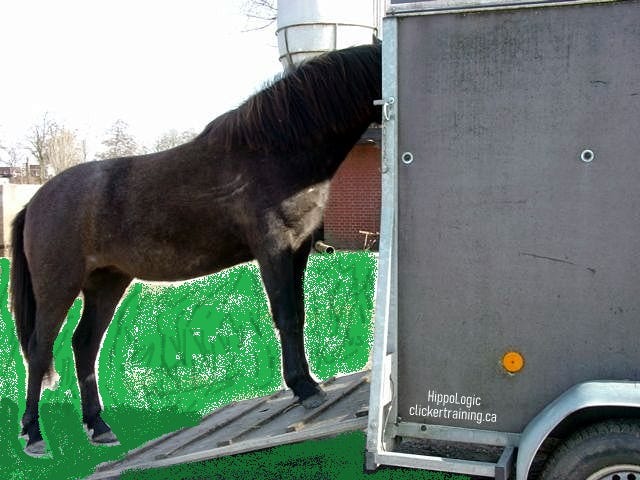
The same horse could also bolt and refuse to go in the trailer because of an appetitive. He has a Moving Towards reason, not to go into the trailer.
Examples:
He would rather stay with his friends. His friends are the appetitive he wants to keep receiving. Their companionship is important. Now, in this moment.
He loves the grass, the trailer is parked on. Your horse is very occupied with grazing and has no intention of stopping. The grass is the reason he wants to stay where he is. It’s much more enticing than walking into the trailer.
He has seen the trailer, but now he’s in the field. He loves the field, his friends and his freedom. He’s not afraid of the trailer, but he chooses to stay in the field. Therefore, he runs off when you’re approaching with the halter. He’s anticipating the situation.
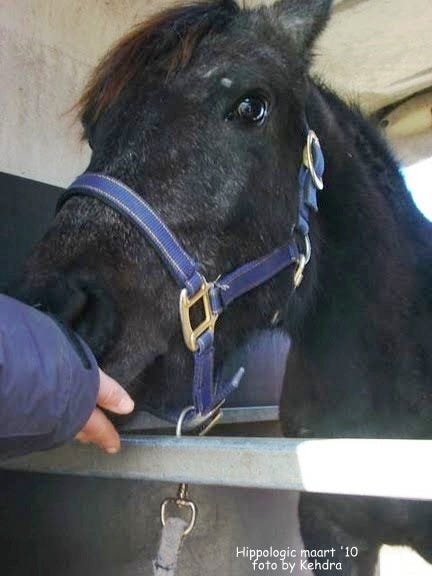
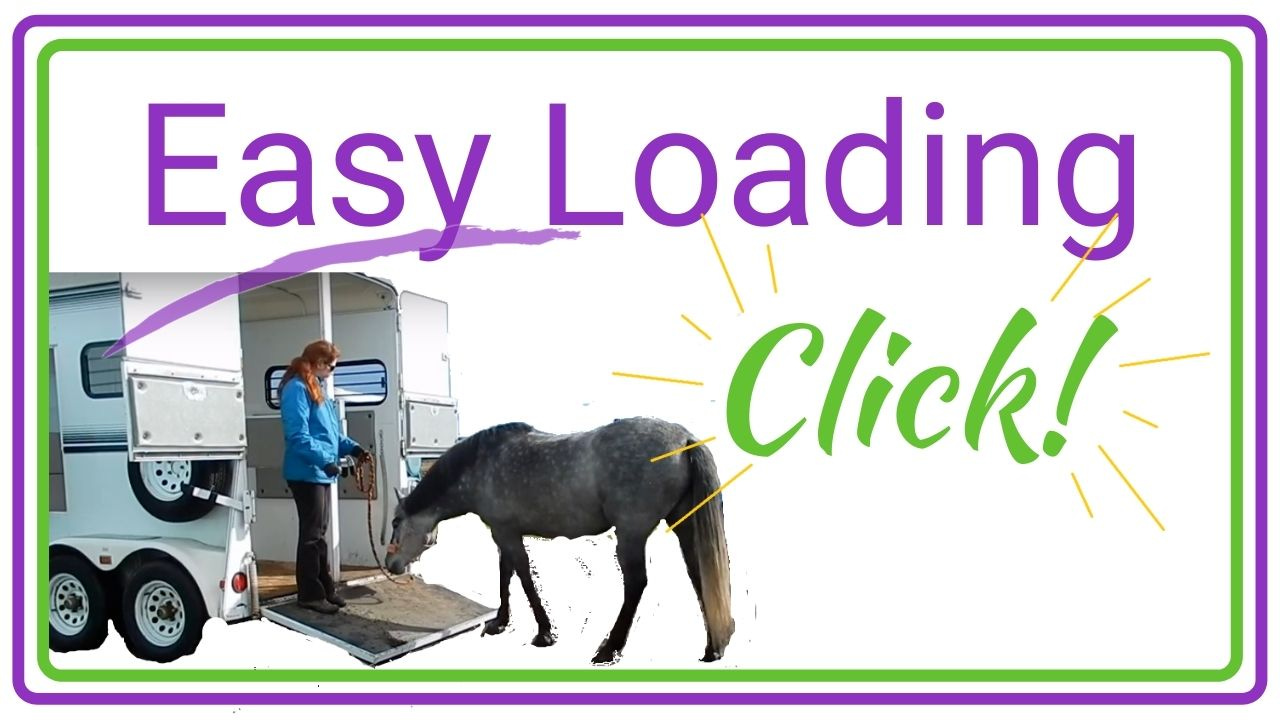
[Trailer training Kyra. Only 3 months after she was captured from the wild. As you can see: she’s not relaxed and confident yet. But she did go in at her own free will and at her own pace (it took a couple of sessions!!)]
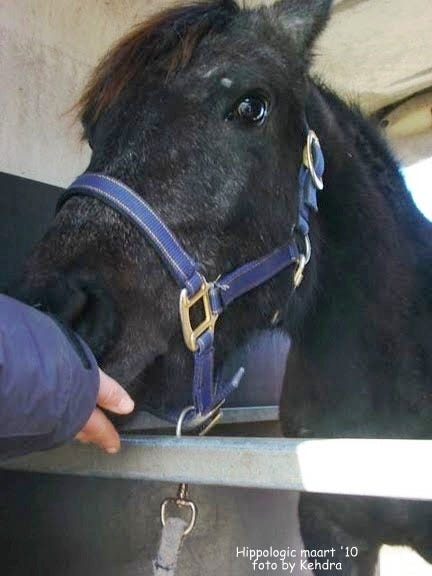
Excellent Trainers Understand the Horse’s Motivation
Remember, you are the trainer if your horse won’t load and you want to change his mind.
I believe that most horse owners know very well what’s going on in their horses’ mind.
Remember that when you were a little girl, you made up voices for the horses? You voiced out loud what was going on in their head?
Most of the time, you were right on point!
It’s just that when you learned to ‘be a horse person’, people taught you the wrong things.
Things like ‘Don’t let your horse win’ or ‘Get away with it’. These thoughts clouded your observational skills and your feelings. It’s because an authority told you this.
Who are you not to believe them?
The answer is: your gut and your mirror neurons. You knew better.
Trust your own instinct when it comes to your horse! (Instinct, not ‘knowledge’. One is in your gut, the other one in your head.)
Anyway, back on topic.
The Solution is in the Motivation!
Once you can understand why your horse is not going into the trailer, you can change his mind.
Your approach depends on his motivation. Here’s how you use this information.
